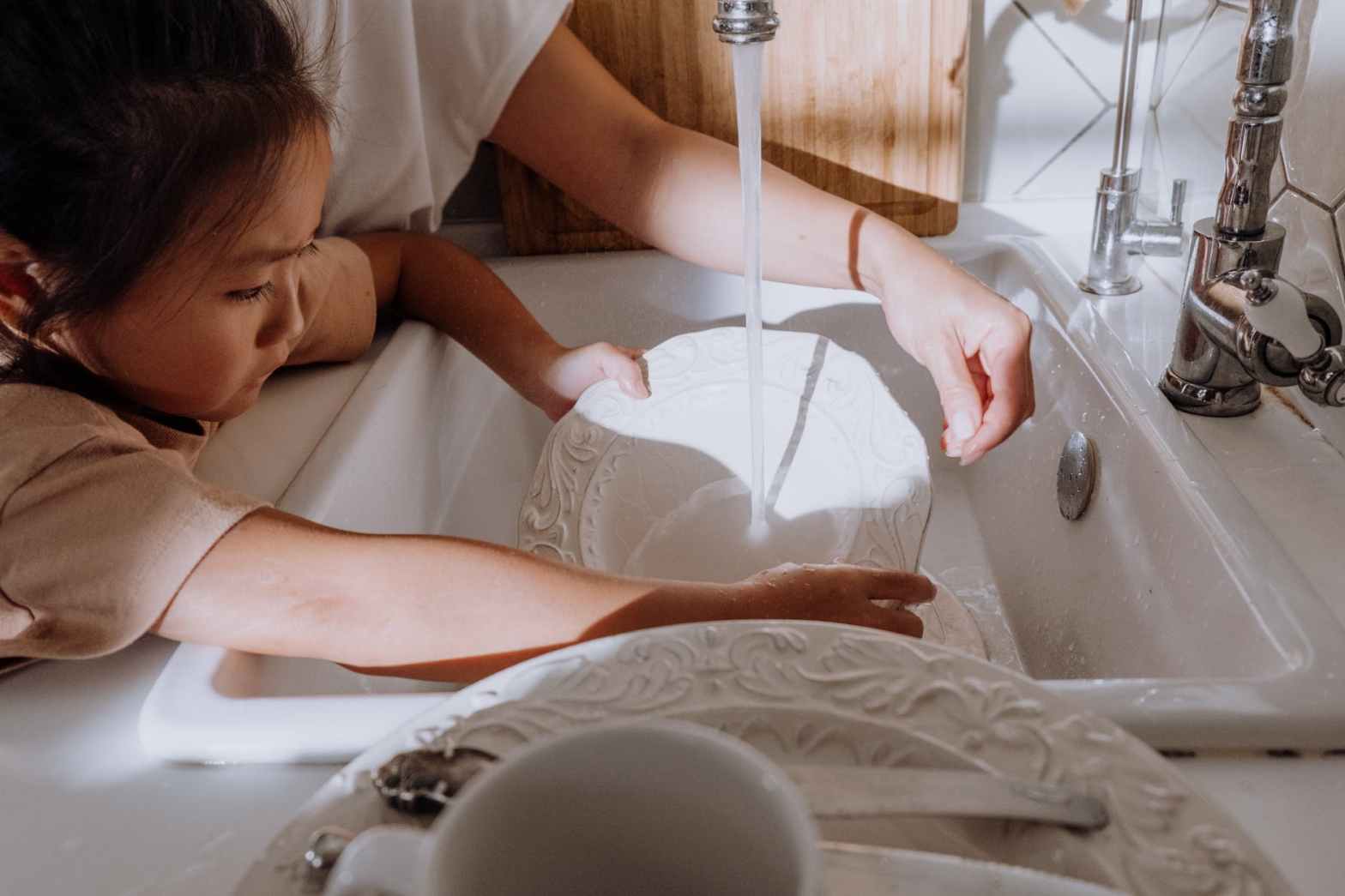
This post is from Moms Take Ten episode 2, Letting Our Children Help, which you can listen to wherever you listen to podcasts or at https://sites.libsyn.com/403493/letting-our-kids-help
Today, I want to talk about the concept of letting our kids help us. This has been a little journey for my family in the past couple of years. I have young children (at the time of recording I have a 3, 3.5 and 4 year old). Whether the task was beyond their ability or that it did not make sense for them to help because of how much extra time it would add, it seemed like there were very few times when they could truly help. To me, it did not make sense to have them help. So, I would often say, “Hey, why don’t you go play?!” or “Hey, let’s turn on this show.” When they were really little, I would close the gate so they couldn’t be in the kitchen with me. “Go down to the basement.” “Go to your room.” “Go to the playroom.” I sent them away from me a lot, and yet I did not feel great about our interactions. It didn’t seem like things were going well in our house but I didn’t know why.
My oldest son’s occupational therapist recommended this book called Hunt, Gather, Parent by Michaeleen Doucleff. It has been a fascinating book to read and think through. I don’t agree with everything that is in it, but there is a lot that I find interesting and have wanted to apply. One of those areas has to do with the concept of letting our children help. Michaeleen talks about how we, in America and the west, are constantly sending our children away. She says this is essentially creating a framework in their minds that their job is to play, watch tv, and to have fun, and our job as the mom or the adult is to do all the work. In doing this, we are shutting down the natural drive that children have to want to help. That is why they are always underfoot or asking “Can I do that mom?” Or they are grabbing the spoon from you or trying to get your tools. Our children want engage in the day-to-day tasks of the household, especially when they are little. They want to participate, to contribute, to have their work valued. Too often, instead of being happy that they are taking initiative, we are shutting them down.
When I read that I was dismayed. To think that I might actually be training my children not to help. But then when they are older, I have an expectation that they would pitch in and help. If we see older children not taking initiative and not helping, it is important to question how much of that is because they were trained not to. Perhaps it is because we did not take the time to cultivate their helpfulness early on. This can be corrected, but how much easier to start when they are young?!
After reading that section of Hunt, Gather, Parent, I knew that I wanted to see change happen in our home. Michaeleen states that change needs to happen first and foremost in the mentality of the parent. I resonated with this. I needed to change how I viewed my children’s helpfulness and desire to help me. Instead of seeing them as in the way, slowing me down, or making a mess as a bad thing, to start to see those as positives. They are there because they want to help, because they care. In slowing me down, we have more opportunities for connection and teaching. Making a mess is how we learn and grow, and how we can turn failures into successes. I should be celebrating the fact that my children are taking initiative and use their interest as an opportunity to train in the different tasks that I do eventually want them to know how to do on their own. I needed to see these moments as opportunities for us to be together as a family unit, working to make our house function. Beyond function, to have our house thrive together.
One of my biggest struggle areas was mealtimes because I felt like I couldn’t even think clearly to make a meal with them running all around me. In the past, when I would get ready to make lunch and dinner, I would turn on a show. That needed to stop for some different reasons having to do with how I felt like the show was impacting my children. When I lost that distraction, I knew that something needed to change. I created a schedule for each meal that said how they could help me. Everyone gets to help make breakfast whether that is getting food out of the fridge, making the toast, or mixing the fruit into their yogurt. Age-appropriate small ways that they can help, that keep them included. Lunch time I do by myself because that is a meal that needs to happen fast. For dinner time, they each have two nights a week that they get to help me cook. I have had a lot of fun with this! They are learning: to chop, to mix, stove safety, how to set the table, what spices are, etc.
They also get to help me with meal planning. Choosing between meats, or between vegetables, or helping brainstorm what we can make. Caleb’s favorite meal is breakfast for dinner and he is becoming a master pancake maker. He mixes the batter, scoops it onto the griddle, flips them over. He adds chocolate chips on special days. He is doing a phenomenal job! Before, I saw his interest as a nuisance, but now I am amazed by him. I am so thankful for these little tweaks that I have been slowly making that have made my children feel more included and valued in their contributions, and has honestly made those times that used to be so stressful a lot more relaxed and fun.
Some of the ideas that Michaeleen talks about in her book go along with that:
- If you are stirring and the child grabs the spoon. Don’t get angry and say, “Don’t grab from mama!” Instead, recognize that the child wants to help and honor that by saying, “Thanks for helping! Next time, can you ask nicely for a turn?”
- Invite your children to watch what you are doing. They can sit in their high chair in the kitchen, or stand on a stool next to you, or sit on a counter and chat with you.
- Ask for help from your children. “Can you carry this?” “Can you go get this for me?” “Can you help me clean?” “Will you do this with me?” “Can you match the socks?” “Can you help me clear the table?”
A big part of this is our response to them when they help. We cheer them on and celebrate their growth! We don’t scold or nag. We model, we teach, we give opportunities for practice. And above all, we have fun with them!
When I started, I sat down and wrote out very simple, practical ways that I could invite my kids into the household tasks. As we have gotten used to working together and their abilities are growing, I can invite them into more and more areas. Take a minute and think about how you can draw your children to you and have them help you more around the house. Start small. Don’t overwhelm yourself or them! Just have fun!
 Lyssa Stoyko